
How to Make Money on Fiverr: A Realistic Guide for Beginners
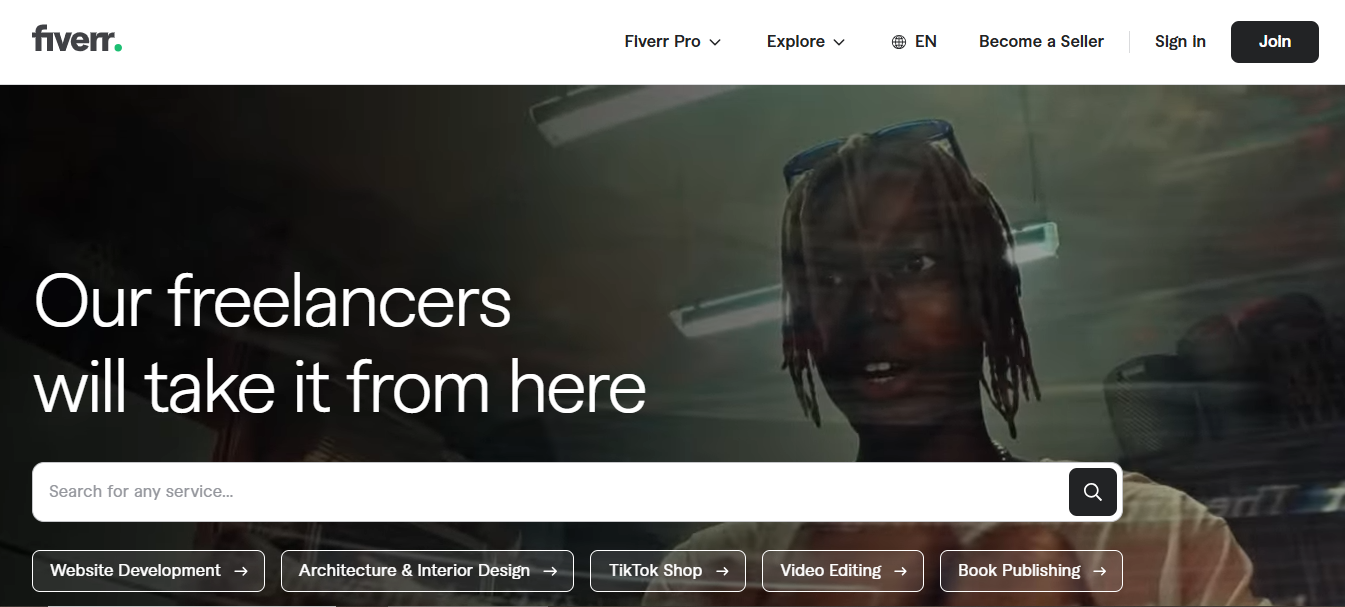
Yes, Fiverr is a legitimate way to earn money freelancing, and you can start with no prior client history — but the platform has changed significantly since its “$5 gig” reputation.
In 2026, low-differentiation gigs (generic logo design, basic article writing, simple voiceovers) have been squeezed hard by free AI tools, while gigs requiring judgment, customization, or the ability to actually use AI tools well have gotten more valuable, not less.
This guide covers how Fiverr actually works, what it costs you as a seller, which gig categories are realistically worth pursuing as a beginner, and how to get your first orders without an existing reputation.
How Fiverr Works for Sellers
Fiverr is a fixed-price marketplace: instead of applying to job posts like on Upwork, you create “gigs” — listed services with defined packages and prices—and buyers find and purchase them directly, often without any back-and-forth negotiation.
This makes Fiverr especially accessible for beginners, since you don’t need to win competitive proposals to get your first sale; you need a gig that ranks and converts when a buyer finds it.
What Fiverr takes
Fiverr charges sellers a flat 20% commission on every order, regardless of seller level or order size — so a $100 gig nets $80 before taxes.
Payout timing depends on your seller status: earnings clear roughly 14 days after order completion for new sellers, dropping to about 7 days once you reach Top Rated status.
Buyers separately pay their own service fee on top of the gig price, which doesn’t affect what you as a seller receive.
Read also: How to Get Freelance Clients: A Realistic 2026 Guide
Fiverr Seller Levels: Why They Matter More Than Most Beginners Realize
Fiverr uses a performance-based tier system — New Seller, Level 1, Level 2, and Top Rated — that directly affects how often your gigs are shown to buyers, not just a badge.
Levels are based on a combination of completed orders, earnings, rating, response rate, order completion rate, and a rolling “Success Score” evaluated over time, not simply how long you’ve had an account.
A buyer who filters search results by “Level 2 and above” will never see a new seller’s gig at all, regardless of quality — which is why the earliest stage of selling on Fiverr is disproportionately about getting your first handful of reviews, even at modest prices, rather than maximising early income.
Top Rated status is the only level Fiverr awards through manual review rather than automatically hitting metric thresholds, and it unlocks the fastest payout clearance and the strongest search visibility.
Exact numeric thresholds for each level are published in Fiverr’s own Seller Level documentation and have been adjusted over time, so check Fiverr’s official help centre for the current requirements rather than relying on older guides.
What’s Actually Selling on Fiverr in 2026
The clearest theme across current Fiverr seller data is a split: categories AI tools can replicate for free or near-free have collapsed in price, while categories requiring judgment, customization, or AI-tool expertise have gotten more valuable.
Generic logo design, basic article writing, and simple voiceover work compete directly against what a buyer can get from a free AI tool in seconds — so gigs in those categories increasingly need a genuine differentiator (a distinctive style, real brand strategy, native-accent voice work) to compete on anything but price.
Categories with more durable demand include:
- Video editing (long-form, Shorts, podcast clips, UGC-style editing) — currently one of the largest categories by raw demand and one of the more AI-resistant ones, since editing judgment and pacing are harder to automate well.
- AI-adjacent services — prompt engineering, AI workflow setup, chatbot and automation building, and AI content editing — driven by businesses adopting AI tools faster than their teams have learned to use them effectively.
- Specialized, voice-driven writing — ghostwriting (newsletters, LinkedIn thought-leadership content, founder-led content) and technical writing for a specific industry, where the seller’s judgment and subject expertise are the actual product, not just assembled words.
- Data and operations support — data entry, lead list building, and CRM enrichment remain durable because they’re tasks buyers consistently want done but don’t want to do themselves, and many still require human verification.
- WordPress and website maintenance — plugin conflicts, speed optimization, and custom theme work stay in consistent demand since WordPress remains widely used and non-technical business owners don’t want to touch it themselves.
What this means if you’re picking a gig category as a beginner
Before committing to a category, search Fiverr directly for your intended gig keyword and look at how saturated the results are and what top sellers are actually charging — this takes a few minutes and can save months of effort in an oversaturated category.
Generalist positioning tends to underperform; sellers who pick one specific, well-defined outcome (“I will edit your podcast episode into 5 vertical clips” rather than “I will do video editing”) tend to convert better because buyers are searching for a specific solution, not a general skillset.
How to Get Your First Orders With No Reviews
- Price competitively for your first several orders, without going to $5. Extremely low pricing signals low quality and attracts clients who are hard to work with; a modest, fair starting price for your category is more sustainable than racing to the bottom.
- Invest real effort in your gig listing. Clear titles, a well-written description, and quality sample images or a short intro video meaningfully affect click-through and conversion, especially before you have reviews to lean on.
- Offer a focused, specific service rather than a broad one. A tightly defined gig is easier for a buyer to evaluate quickly and easier for you to deliver consistently and fast — both of which matter for your early ratings.
- Respond quickly to buyer messages. Response rate and response time are tracked metrics that affect your seller level, and fast responses also directly improve conversion, since buyers often message several sellers before deciding.
- Deliver reliably, even if it means starting with a smaller scope. Your first few reviews matter more than your first few paychecks, since low ratings early on are disproportionately damaging before you’ve built a track record to offset them.
Realistic Earnings Expectations
Fiverr freelancer pay varies enormously by category, seller level, and how differentiated your service is — there’s no single representative number, and be skeptical of any guide that quotes one confidently.
Broadly, expect the New Seller period to be the slowest and lowest-paying phase, since you have no reviews or level badge to build buyer trust, and expect specialized, judgment-heavy categories (technical writing, AI workflow consulting, high-quality video editing) to command meaningfully more than commodity categories that compete against free AI output.
Fiverr’s own 20% commission also reduces your take-home on every order regardless of level, so factor that into your pricing rather than treating your listed price as your actual income.
Advantages and Disadvantages
| Fiverr | |
|---|---|
| Pros | No competitive proposal process — buyers purchase gigs directly; accessible to genuine beginners; large, consistent buyer traffic across many categories |
| Cons | Flat 20% commission on every order; New Seller visibility is limited until you build reviews; commodity categories face real downward price pressure from free AI tools; payout clearance (14 days for new sellers) can strain early cash flow |
Common Beginner Mistakes
- Choosing a saturated, commodity category without checking demand first, then wondering why a well-made gig gets no orders.
- Underpricing dramatically to win the first sale. This attracts difficult clients and makes raising prices later harder, since your existing buyers expect the old rate.
- Listing too many broad services on one gig instead of a specific, clearly defined outcome buyers can quickly evaluate.
- Ignoring response time and communication metrics, which affect both conversion and seller level progression, not just buyer satisfaction.
- Treating a gig description as a one-time task. Top sellers revisit and refine gig titles, descriptions, and pricing based on what’s actually converting, rather than publishing once and leaving it untouched.
How to Spot Fiverr-Related Scams
- Never accept payment or communication outside Fiverr’s platform. Fiverr’s terms require all payment to go through the platform, both for buyer and seller protection; being asked to move to direct payment (bank transfer, PayPal outside the platform) is a common scam pattern and also risks account suspension.
- Be cautious of buyers asking for large amounts of free “sample” work before committing to an order. A reasonable, brief portfolio sample is normal; being asked to complete substantial unpaid work “to prove your skills” before any paid commitment is a red flag.
- Watch for course or “Fiverr success system” sellers promising guaranteed high income. Nobody can guarantee your Fiverr income, since it depends on your niche, skill, competition, and effort — be skeptical of paid courses implying otherwise.
Frequently Asked Questions
Is Fiverr actually worth it in 2026, or has AI killed it? It’s still worth it for the right category and approach. AI tools have genuinely commoditized low-differentiation gigs (basic writing, generic design, simple voiceover), but categories requiring judgment, customization, or AI-tool expertise — video editing, specialized writing, AI workflow consulting — remain in real demand. The platform has shifted, not disappeared.
How much does Fiverr take from sellers? Fiverr charges a flat 20% commission on every completed order, regardless of your seller level or order size. Buyers pay a separate service fee that doesn’t affect your payout.
How long does it take to get your first order on Fiverr? This varies enormously by category, competition, pricing, and gig quality — there’s no reliable universal timeline. A well-optimized gig in a category with real demand and manageable competition can get orders within days to a few weeks; a gig in an oversaturated or AI-commoditized category may take much longer or struggle to gain traction regardless of quality.
What are the best Fiverr gigs for complete beginners? Categories with a lower skill barrier — proofreading, data entry, basic virtual assistant tasks, simple graphic templates — are commonly used as a starting point to build initial reviews. Be aware these tend to be lower-paying and more competitive; many beginners use them as a stepping stone toward a more specialized, higher-value category once they’ve built some reviews and platform familiarity.
Do I need to be a Fiverr Level 2 or Top Rated seller to make good money? Not strictly, but it helps significantly. New Seller gigs have limited search visibility since buyers can filter by level, so climbing to Level 1 and Level 2 meaningfully increases how often your gigs are seen. Some sellers earn well at Level 1 or Level 2 in a strong niche; Top Rated adds faster payouts and stronger visibility but isn’t a strict requirement for meaningful income.
Can I get banned from Fiverr, and what causes it? Yes. Common causes include soliciting or accepting payment outside the platform, violating intellectual property rules, misrepresenting your services, or repeated policy violations flagged during order disputes. Review Fiverr’s current Terms of Service directly, since specific enforcement policies can change.
Is Fiverr better than Upwork for beginners? They work differently rather than one being categorically better. Fiverr’s fixed-gig model means buyers purchase directly without a competitive proposal process, which some beginners find more accessible. Upwork’s proposal-based model can require more upfront pitching effort but sometimes suits ongoing or larger-scope client relationships better. Many freelancers use both.
The Bottom Line
Fiverr remains a legitimate way to earn money in 2026, but the easy, low-effort version of the platform that made it famous — quick $5 gigs with minimal differentiation — has largely been squeezed out by free AI tools. The realistic path now is picking a category with real, verifiable demand (checking Fiverr’s own search results before committing), building an initial handful of reviews even at modest pricing, and focusing on a specific, well-defined service rather than a broad, generic one.
Fiverr’s flat 20% commission and New Seller visibility limits are real constraints to factor into your pricing and expectations from day one, not surprises to discover later.
The most sensible next step is to search Fiverr directly for a few gig ideas that match a skill you already have, look honestly at how saturated and AI-resistant that category actually is, and build a focused, well-written gig around the most specific version of that service you can credibly deliver.
Read also: